I’d say watch it again as he explains that it’s playing on the Rane screen and also on his laptop in Serato at the same time, and tracking platter movement etc. So it’s allowing full Serato control with one side and other sources on the other, that’s incredibly impressive.
Apparently so, otherwise why was this feature quietly removed from the P4+ and why is it (still) not available on the new SoC?
I really don’t want to argue about stems because I don’t see any problem with simply rendering all the tracks and being done with it.
EngineOS 4.3.4 handles it very well, and I even let VDJ pre-render even though I have 50x.
Stem effects that fit my workflow are much more important to me. Especially with those damn short radio edits, the vocal echo out and a loop are sometimes really nice… It’s a really nice feature… Whether the stems took three days to render beforehand is completely irrelevant to me during a gig.
The discussions here always focus solely on the capabilities of the CPU in a single device. But what if a completely different approach were taken? Think out of the box. Since many devices are connected to the internet, why not perform computationally intensive tasks on powerful server farms in the cloud rather than on the device itself (offload data shuffle workflows)?
Even without an internet connection, you could use the processing power of several network-linked devices in parallel, just like standalone players, which automatically combine their computing power. Alternatively, imagine having instant access to the immense computing power of the smartphones, tablets, and computers nearby.
Ultimately, many paths can lead to the goal, and it is important to recognise that each one could be valid.
Just imagine what DJ gear could do if it integrates third-party services! Just think how amazing it would be if they did it similarly to DJ Studio Software, using already existing APIs to add more useful functions and services!
Love to see what the future holds!
Offloading stems processing to a cloud-hosted server creates licensing issues.
Here’s another good review for those who haven’t seen this one yet.. 


I mentioned that, I was told I’m a dreamer LOL
Interesting information: the reviewer for the French channel “Le Warm Up du DJ,” who is an official reviewer for InMusic products, explicitly mentioned “the imminent arrival of Spotify as a streaming service as a sure thing,” stating that this information was passed on to him by Rane.
We can therefore expect this to also happen on Denon Prime and Numark products.
It remains to be seen whether Spotify, like Amazon and Apple, will require a DRM control chip or not, which, if so, could leave many units without this chip behind.
Topaz now offer that for their video upscaling software if your PC is too slow to process it.
It would have to be a subscription to cover the traffic, but that would be fine if the stems were better quality than they are right now.
Now we have an Desktop Update OOONLY for System One. Whats about other devices ?
Any statement from the Mods here ?
I expect that at most there will be bug fixes, and then that’s it for the 4.3.x devices.
They already do everything this series should be able to do.
The only exception is the P4+, which doesn’t have onboard stems.
Otherwise, there’s no reason for InMusic to equip the devices with features found in the new OS.
Otherwise, InMusic would have to maintain two operating systems, and I don’t think they’ll do that.
My take? Denon/inMusic were probably working on the next gen of hardware and stems were an early alpha concept, brought it forth for IRL feedback, then pulled it to reallocate resources, refine it and work on hurdles. Pretty apparent since all the review influencers have said it’s coming sooner than later. The focus is on the new stuff and bring the rest up to speed.
Marking faux pas? Maybe, sure.
Using it as a industry conversation buzz and glimpse to the future? Absolutely.
by the way Comparing some CPU Specs 
Rane System One:
- Quad-core ARM® Processor with 4 GB RAM
AKAI MPC Live III:
- 8-core ARM® processor with 8 GB RAM
AKAI MPC XL:
- 8-core processor with 16 GB RAM
possible that there will be a hard cut what could mean older gear stays locked on Versions 4.x and 2026 units and newer will be eligible to get Versions >5 & above
Well, if it’s a quad-core instead of the eight-core from MPC Live III, then it’s either an RK3568, an RK3566, or an RK3562, depending on the core types and frequencies.
The fact that they don’t specify the exact model is far from a good sign. If it were a top-of-the-line CPU, you can be sure that would be highlighted as a marketing point.
true for sure. Regarding MPC XL there is no information what kind of CPU they build in
Now that we know it’s a quad-core processor in the System One, I think there’s a good chance it’s an RK3566. If I had to bet, I’d definitely bet on that one.
RK3566 – 4× Cortex-A55 cores @1.8GHz / 2GHz boost
When I said that InMusic was looking to maximize profit by choosing an RK3588, I was way off the mark, because if it really is an RK3566, then they’re even stingier than I thought… especially for a $2500 product.
Maybe they’re in the process of “Alphathetization”. Always more expensive for chips that even low-cost Chinese tablets don’t use.
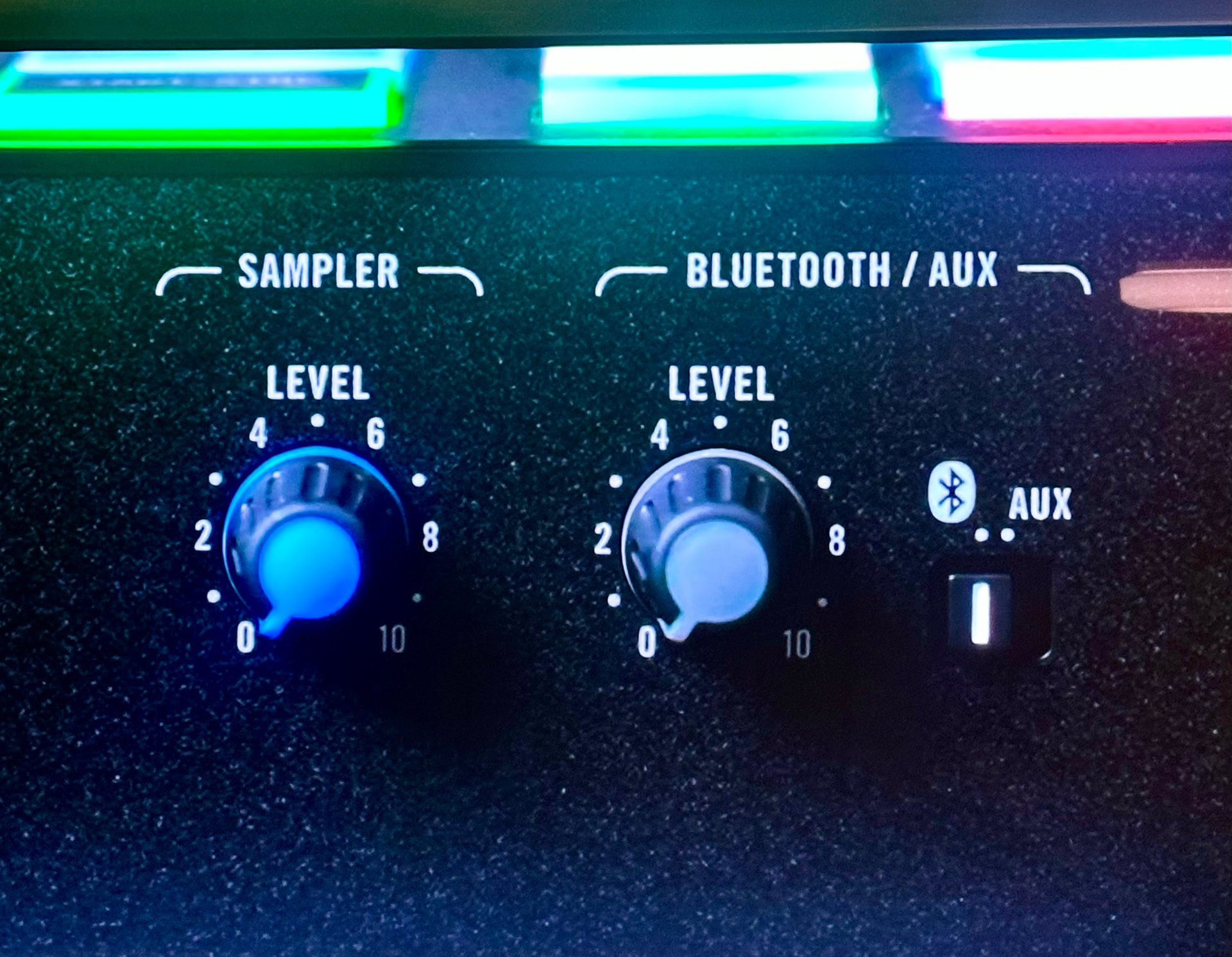
Have any of the reviewers covered the sampler, and if so - are there any improvements?
You know, like actual looping and syncing.
I don’t care about crossfaders. Worsening the trend of the Euphonia’s lack of digital output with now no digital inputs, too, and while three actual work channels on top is, IMO, the optimal number, only if you’ve got input matrixing and like 4 or, better yet, 5 rear channel groupings to choose from. If I got this for just 3 CDJs, which sounds on the surface like a fantastic idea considering InMusic’s aversion to Hi-Fi sound from their players’ processing, I demand SPDIF inputs at this price for a digital mixer. Sorry, but this design’s an automatic fail on multiple aspects. That’s a shame, because I was actually looking forward to this release and getting one.