Well, reread this text; it’s certainly progress, but we’re far from it… I said I would applaud if we had a chip capable of doing it on the fly (therefore without any pre-rendering of the stems on local storage, since with you, one must be precise in every detail) with an acceptable processing time (by acceptable, I mean less than 30 seconds) and with a rendering quality at least equivalent to what DJAY or VDJ offer at their best. But that’s not what we’re getting here.
So yes, this will certainly satisfy occasional stem users who aren’t too fussy about rendering quality/speed. Those who find it “good enough,” but I work in clubs and regularly on large sound systems; I can’t be satisfied with average quality.
And once again, this is a chip platform that’s only in its early stages at InMusic. So unless they decide to switch chips very quickly and not stick with this one for 7 years like they did with the previous platform, we’re in for 5 to 7 years of this same chip being used in every possible way in all the group’s upcoming products. A chip that’s “a little faster than the previous one” but already not capable of creating V1 stems on the fly… so forget about Djay’s high-quality V2 stems.
In two years even the best separation quality currently available will be outdated and obsolete. Conceptually, I am absolutely convinced that the best option is to get pre-rendered files. 1. They don’t clog up the CPU. 2. Storage space is currently not an issue at all. 3. When the separation algorithm improves, it will simply require more computer resources without burdening the player.
My VDJ stems folder is 90gb, be nice not to have to recreate them all again for Engine. I never bothered with them for the Prime Go plus at all.
Think I’m going to order the System One as after watching the full tutorial it looks impressive. Using the Prime Go has been challenging but I feel after a year I understand Engine good enough to upgrade. Most of my gigs are still video with VDJ but it offers the best of both worlds and instant backup too.
I’m confident Engine is moving forward, my only reservation is the time it’s taking and poor communication regarding confirmed bugs.
We’ll also order a few units instead of the P4+.
I won’t be using the SystemOne myself.
I need four channels and I’m glad the calluses on my thumb are gone, which I used to have to hold my hand for slow down all these years.It’s a matter of taste, and the device is great, but I’m pragmatic about it.
(I’m getting old… )
For clubs and smaller bars, I had previously favored the P4.
I’ve moved away from that for now.
I wouldn’t want to put the P4+ back in storage right now.
the ability to spontaneously use stems from any track on your computer
no wasted storage space for stems that could be better used to expand your track collection.
The difference is that the level of separation quality currently achieved by Stems V2 in Virtual DJ/Djay Pro is already high enough to be used on large sound systems without audible artifacts.
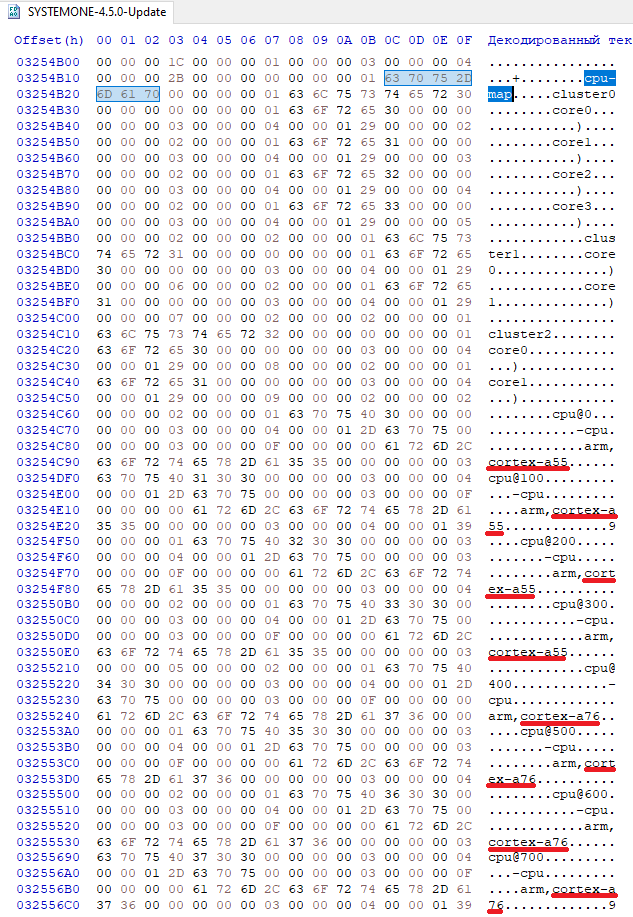
It would be utterly idiotic to use an 8-core chip and disable 4 cores to intentionally use only 4.
Or perhaps it’s a batch of RK3588s with faulty cores that were disabled and lower frequencies and bought at a discount because they didn’t pass the 8-core tests.
I don’t understand the strategy here. If the units have an 8-core SoC, why mention that it’s a quad-core on Rane’s website?
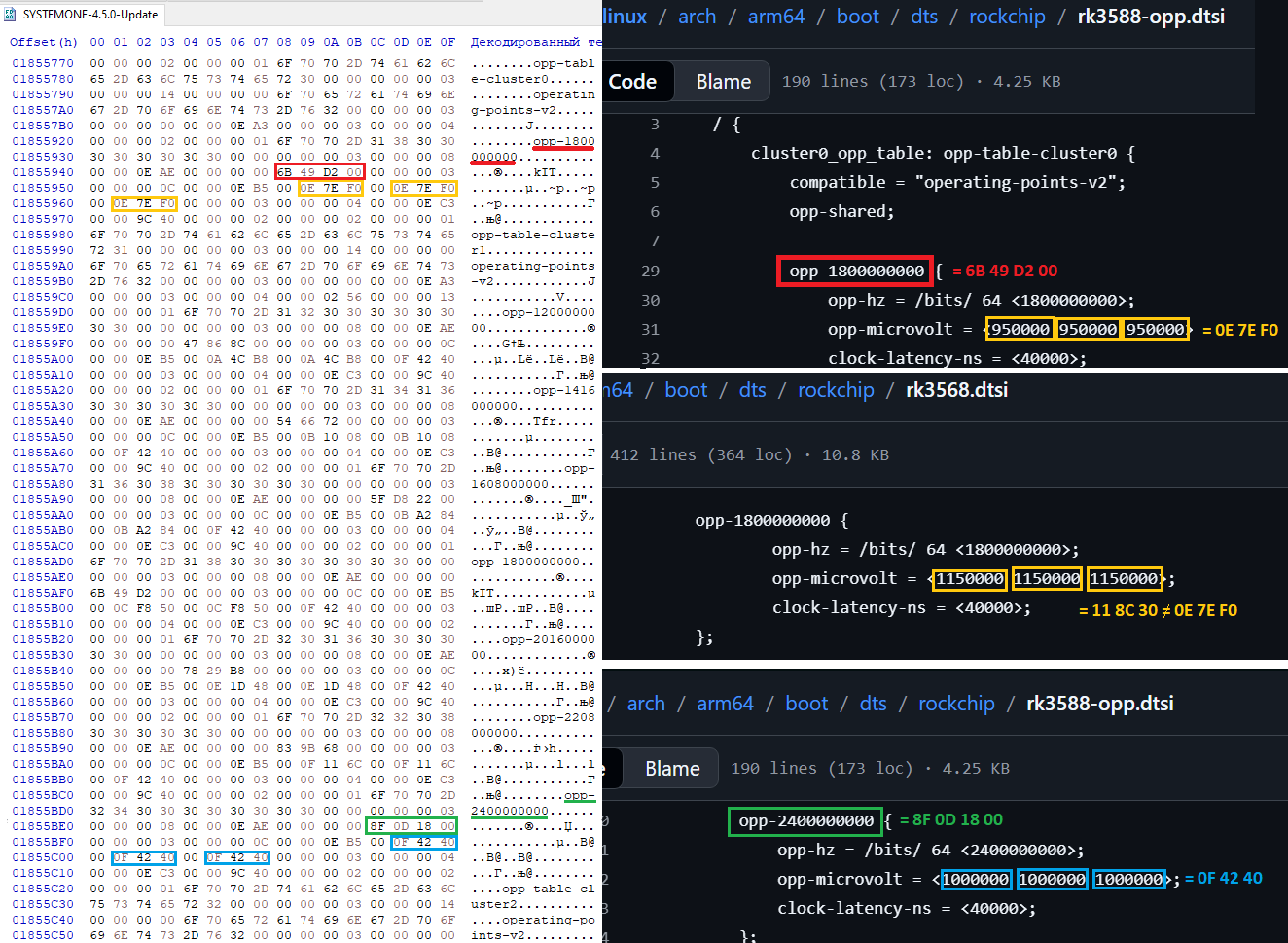
The RK 3566/68 might simply be RK3588s with some cores disabled because they failed quality control; who knows? Many CPU manufacturers do this to recycle high-end CPUs that didn’t pass testing and sell them under lower model numbers.
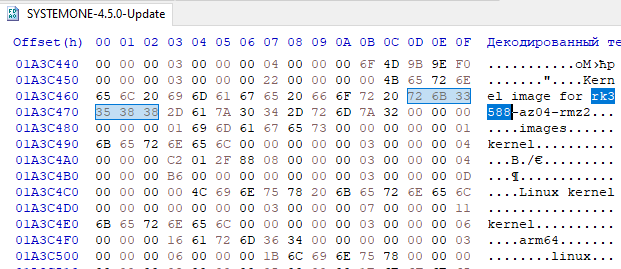
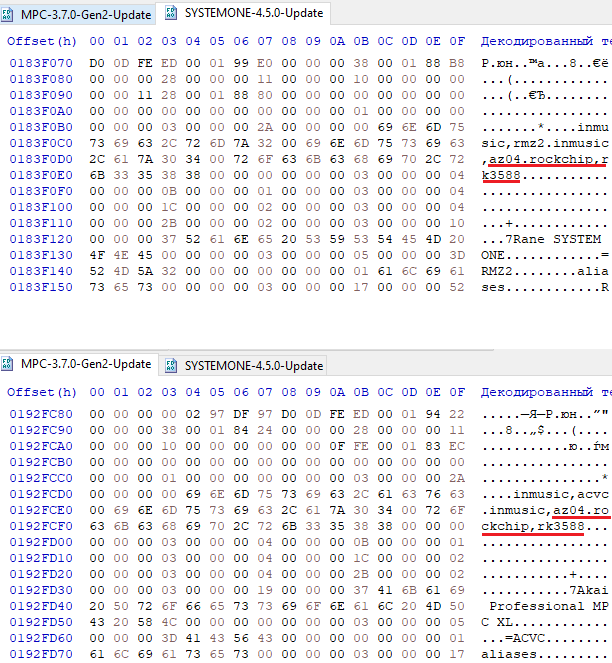
This is just a string inside the firmware image. It doesn’t necessarily mean that the System One has that SoC. It is likely a string from the build system kernel recipe (Yocto/Buildroot/etc.) that came with the BSP. That same kernel image may support several variants of the RK35xx family.
Either it’s a 3588 with four cores disabled, and if so, the question is, “Why are they disabled?”
Or it’s a 3588 rebranded as a lower-end 3566/3568 model because it failed factory quality control in its 8-core version.
Or it’s a lower-end quad-core 3566/3568 model.
In any case, you’re not getting the true performance of the 3588 (which isn’t exactly a powerhouse in its full 8-core version compared to other competing ARM chips).
The only thing you prove here, is that the boot partition contains a compiled device tree (.dtb) for the RK3588. There could be .dtb files for other hardware configurations. The bootloader loads the .dtb that matches the hardware and passes it to the kernel. Have you tried looking for other .dtb files?
Look, your binary digging is interesting, and I really hope that the System One has the RK3588. But the only way to know for sure is if InMusic shares the specs, or if someone opens up the device and takes a peek.
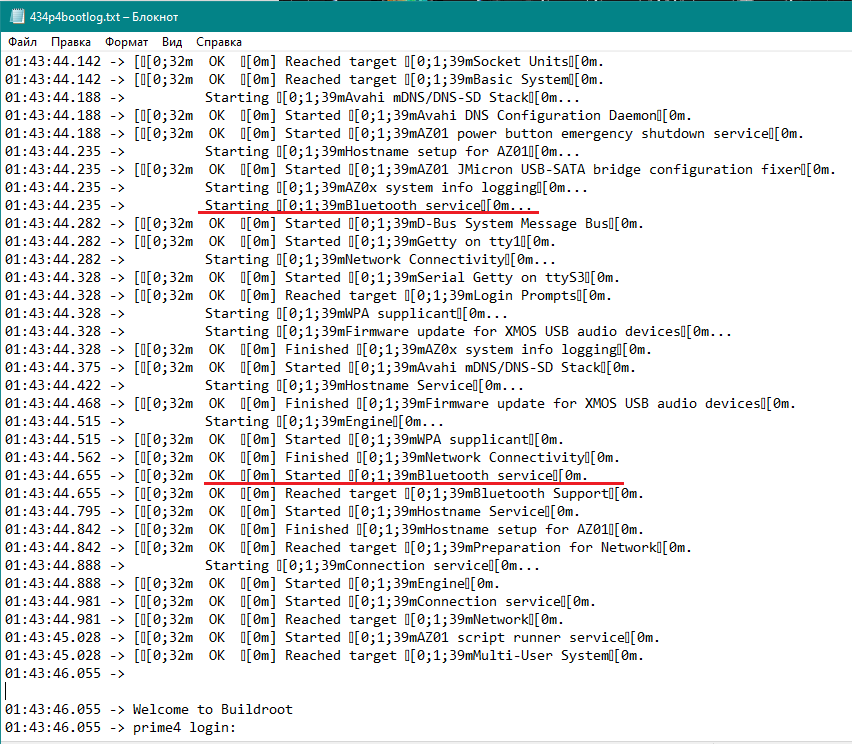
Bluetooth is disabled on the Prime because the Prime 4’s Bluetooth chip is a previous generation chip that didn’t perform well in terms of stability during testing.
This is also the case on other devices equipped with the first-generation Bluetooth chip, the SC5000 and Prime 2, if I’m not mistaken.
While the CPU chip is still an RK3288 on all previous generation devices, the Bluetooth chip has undergone several revisions (perhaps they went from a Bluetooth 4.0 chip to a Bluetooth 5.0 chip?).
I sincerely believe that if the team could have offered a stable Bluetooth experience to all users, they certainly would have. It’s not the team’s philosophy to remove such a minor feature as Bluetooth support, especially for marketing reasons.
And intentionally disabling four cores on a CPU, which prevents users from fully benefiting from its multi-core performance on the device, makes no sense. What would be their motivation?

 )
)